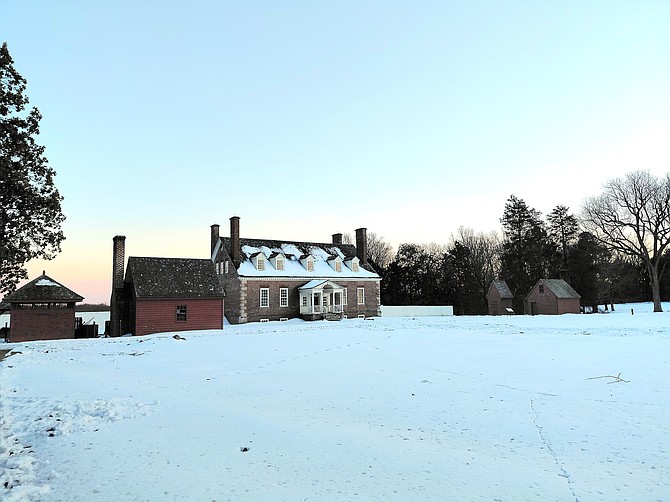
West facade and entry of Gunston Hall in the snow.
Gunston Hall, “the Home of American Rights,” has a new leader, Dr. Christopher Eck, who started as executive director in January at this historic site on Mason Neck in southeastern Fairfax County.
“I believe that Virginia is blessed with a treasure of significant historic sites, such as Gunston Hall,” Eck said in a Feb. 12 interview. “They are especially relevant in this 250th anniversary year of both George Mason's writing of the Virginia Declaration of Rights and the founding of the United States.
“People want to connect with the tangible places where history was made, where the figures of our past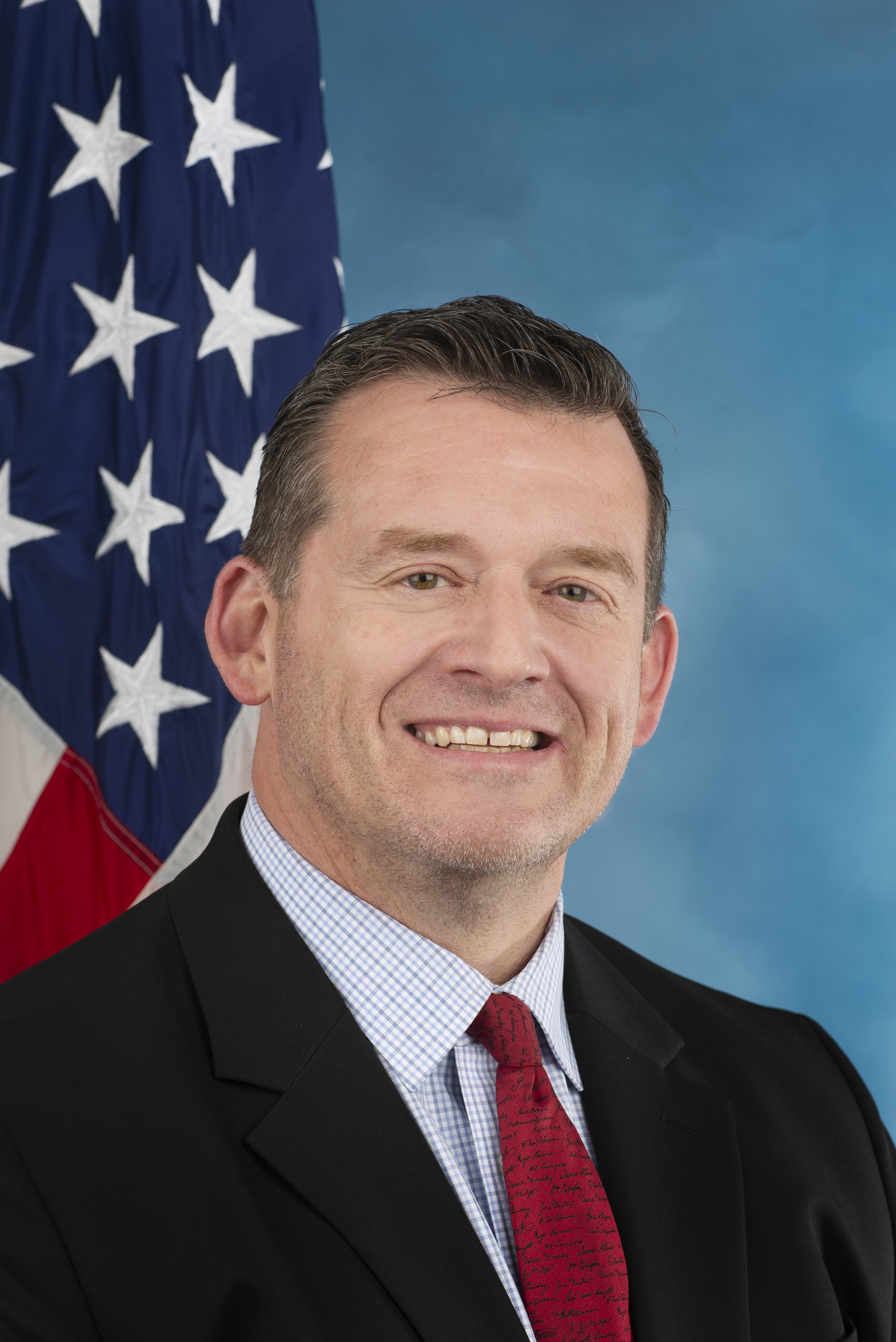 lived and where the ideas and ideals that shaped our nation began,” he continued. “Just like with great art, we all want to see the 'original' of something, because our historic sites are imbued with meaning from their physical witness to the people and events that made us who we are."
Eck has worked in historic preservation, archaeology and public administration for over two decades in academia and federal and local government. Prior to this position, he was executive director of the National Historical Publications and Records Commission at the National Archives, where he managed grantmaking to preserve and digitize non-federal historic documents, like George Washington’s papers.
A registered professional archaeologist, Eck has also held preservation and cultural resources positions with the U.S. Departments of Defense and Commerce, the General Services Administration and metropolitan governments.
He grew up in Atlanta, Georgia, majored in history at Loyola University in New Orleans, Louisiana, received a master’s in historical archaeology from the University of Massachusetts and a law degree from the University of Miami. He has taught historic preservation law at the university level. He, his wife and two college-age children live near Warrenton, Virginia.
2026 Plans and Events
Gunston Hall will commemorate the 250th anniversary of the June 12, 1776, Virginia Declaration of Rights with special programming and public events.
Eck’s plans also include a March screening of a film about Phillis Wheatley, an 18th-century African-American writer, that was filmed at Gunston Hall and Mount Vernon Estate; a gala on May 16 and July 4th speakers. “Families in Focus” will offer programs on the Masons and enslaved families that lived there. Ongoing events include colonial food demonstrations, history talks, cocktails by candlelight, 18th century game nights, school and other tours and nature walks.
Eck works with the Descendants Advisory Board which is composed of people who trace their ancestry to people enslaved at Gunston Hall.
Mason’s Legacy
Gunston Hall was the plantation of the Mason family, starting with George IV’s great-grandfather, George I, who fled England in the 1650s after the defeat of the Royalists. George Mason IV helped author the Fairfax Resolves asserting the rights of the then-British colonists and the 1776 Virginia Declaration of Rights, 16 articles that historians say was the first founding document to call for individual liberties such as freedom of religion and freedom of the press. This landmark document had far-reaching impacts, including influencing the Declaration of Independence and the U.S. Constitution’s Bill of Rights.
Mason refused to sign the new U.S. Constitution, mainly because it lacked a bill of rights, amendments added in 1791, a year before his death. One irony in Mason’s life is that he fervently believed in individual rights and supported a revolution to free the nation from the British monarchy, but he enslaved people, lived in a house built by enslaved people and never freed his slaves.
Mason lived his whole life on Mason Neck, Eck said. “Philadelphia [for the Constitutional convention] is the longest trip he ever took,” but like many of Mason’s contemporaries, he “wrote and read a lot,” writers such as Montesquieu, an 18th century French philosopher who is credited with the governmental theory of the separation of powers.
Gunston Hall is an accredited museum, a national historic landmark and a popular tourist destination. Today’s 554-acre property is one-tenth of the original plantation’s size and home to the Masons’ 3,200-square-foot mansion, several outbuildings, a restored 1780s garden and the remains of a barn’s foundation.
“We are thrilled to welcome Christopher Eck as our new executive director,” said Virginia Nicholson, first regent of Gunston Hall, in an announcement. “He brings with him a powerful combination of historic preservation knowledge, archaeological background, strategic leadership and deep passion for our mission. Chris is the ideal leader to guide Gunston Hall into our next chapter of growth and impact.”
To help preserve the legacy of one of the nation’s founders is “phenomenal,” Eck said.